Creators tag products directly inside YouTube videos, YouTube Shorts, and live streams, then surface those items in a product shelf, shopping tab, and other shopping features that shorten the path to checkout. In other words, YouTube isn’t just awareness — it’s Social Shopping with intent layered in, because YouTube behaves like a search engine and a video-first shopping platform.
Zoom out and you’ll recognize the same pattern across Social Commerce: TikTok pushes Discovery-Driven Shopping via feed distribution, Instagram pushes Insta shop monetization through Shoppable posts, and YouTube pushes “research-first” commerce where trust accumulates over time. For ecommerce brands, that matters because long-form trust building improves Conversion Rate Optimization (CRO) on the other end of the funnel, raising Average Order Value (AOV) and improving Social Commerce ROI when you can measure it. If you’ve invested in PDP optimization and PDP content for your Shopify storefront, YouTube is increasingly the channel that pre-sells that PDP before a shopper ever lands there.
And yes, this fits into the broader world of Shoppable Social media: TikTok Shop, Pinterest Shopping, Facebook Shops, YouTube Shopping, and the more technical backbone of Headless Commerce and API-Driven Commerce that keeps catalog, pricing, and attribution consistent. The brands that win here don’t treat YouTube as a content calendar. They treat it as Shoppable Social for eCommerce — a conversion system where the video becomes the new product page.
What Is YouTube Shopping?
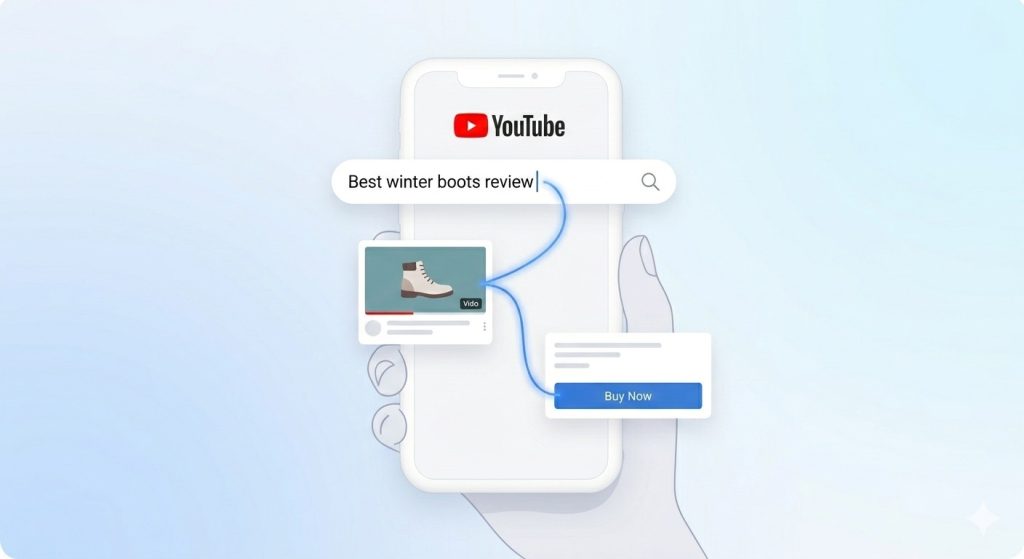
YouTube Shopping is a set of YouTube shopping features that allow eligible creators and merchants to showcase products on YouTube surfaces like a channel store, product shelf under videos, product links in the video description, and shopping buttons/stickers in Shorts and long-form videos. YouTube’s own documentation frames this as “Shopping on YouTube,” with eligibility gates tied to the YouTube Partner Program, subscriber thresholds, and geography.
How YouTube Shopping works
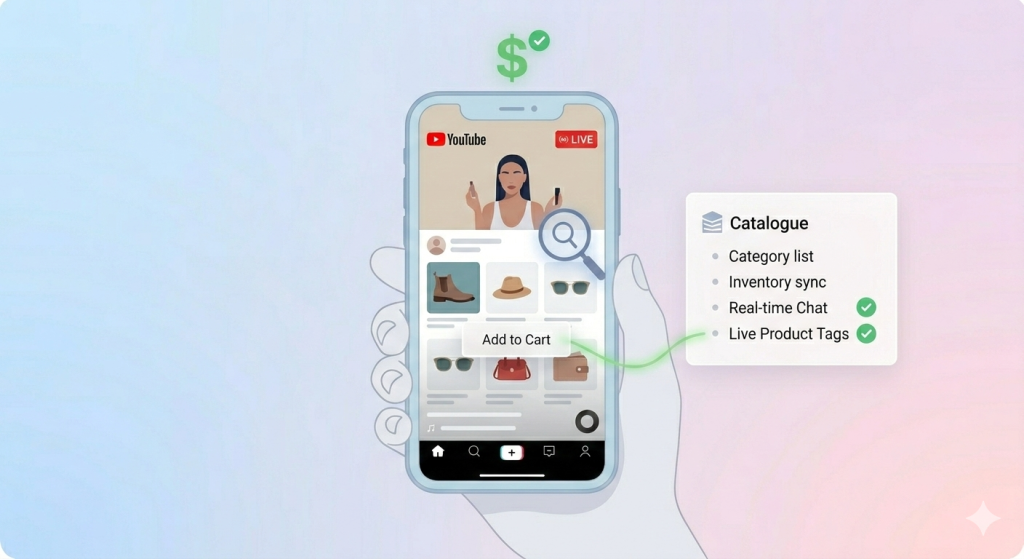
At a practical level, YouTube Shopping is “structured product metadata attached to a video,” plus UI placements that make shopping feel native rather than bolted-on. When a creator tags products, viewers see a shopping button in long-form videos or a shopping product sticker in Shorts; clicking opens a list of tagged items, often with price, product info, and a path to purchase. That’s a meaningful shift for the Engagement-to-Purchase Funnel: you’re not hoping users remember a link later — you’re letting them act at the moment of intent.
YouTube also supports shopping in live streams where “real-time” demonstration and audience Q&A do the trust work that most PDPs struggle to replicate. The psychology is familiar: live formats create urgency, reduce uncertainty, and reinforce Trust Signals in Commerce because the shopper sees the product used, discussed, and validated in context. If you’ve ever watched a creator troubleshoot a product live, you’ve felt the difference between a polished ad and credible proof.
Finally, YouTube Shopping sits on top of commerce infrastructure such as Google Merchant Center integrations and retailer connections that keep product availability and data clean. Shopify’s documentation is explicit: many setups run through the Google & YouTube channel, which can sync product data into Merchant Center and enable YouTube Shopping setup from within Shopify admin.
Who can use YouTube Shopping?
Eligibility is split between merchants and creators, and YouTube is fairly precise about gates. For “Shopping on YouTube,” YouTube Help lists requirements like being in the YouTube Partner Program, location eligibility (including the United States, South Korea, Indonesia, India, Thailand, and Vietnam), and subscriber thresholds (often cited as 10,000+ for certain features). For the YouTube shopping affiliate program, the minimums can differ (e.g., 5,000+ subscribers) and include additional constraints like excluding certain music channels (including an official artist channel) and “made for kids” settings.
On the merchant side, you’ll typically need a compliant product feed and proper policies. Shopify also notes that embedded checkout in the YouTube app is US-only in certain configurations, while other regions may redirect to the merchant site. If you operate globally, this regional nuance is not trivia — it changes your funnel math, your analytics expectations, and sometimes your merchandising strategy.
YouTube Shopping vs YouTube Ads
YouTube Shopping is fundamentally about making organic video commerce measurable and actionable; YouTube Ads is paid distribution. Ads can absolutely amplify shopping content, but if your foundation is weak — poor SEO titles, no product tagging, mismatched product feed, unclear CTAs — ads simply accelerate wasted spend. In practice, the best operators treat shopping-enabled content as “conversion-ready inventory,” then use paid to scale what is already working, rather than using paid as a crutch.
Why YouTube is different in Social Commerce
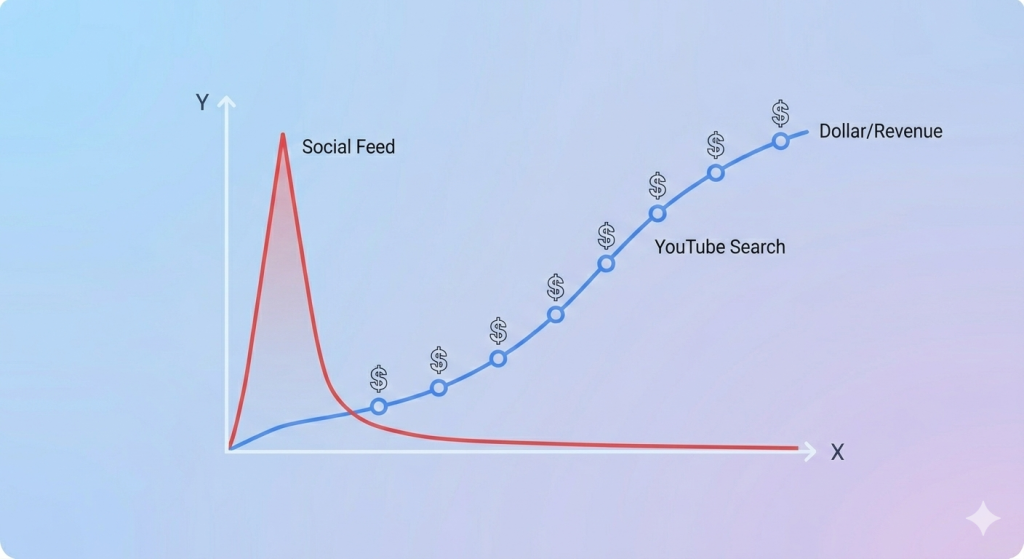
Search-based product discovery (YouTube is a search engine, not just a feed)
TikTok drives discovery through algorithmic serendipity; YouTube drives discovery through search intent and suggested adjacency. That has a downstream impact on Revenue Attribution because YouTube touches both “I’m curious” and “I’m comparing,” which often show up as assisted conversions rather than last-click winners. If you’re measuring social commerce performance purely on direct conversions, you’ll under-value YouTube in the same way many brands under-valued early SEO.
Long-form trust building changes conversion psychology
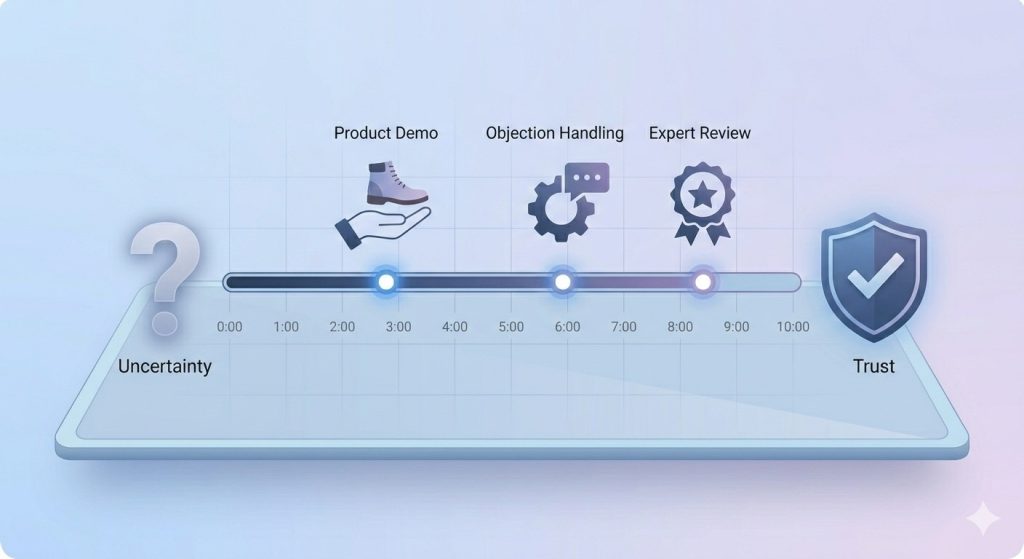
YouTube’s advantage is time. Long-form videos and structured series create a narrative that can do the job of retail staff: explaining tradeoffs, showing use cases, answering objections, and demonstrating credibility. Think of this as applied Psychology of selling: shoppers don’t buy when they’re merely entertained — they buy when uncertainty drops below a threshold. YouTube creates that certainty more reliably than short-form platforms because it gives the creator enough time to earn belief.
Evergreen shelf life compounds performance
A TikTok video can spike and disappear; a YouTube review can rank for years. Evergreen shelf life changes the economics of content production and the KPI lens you use to judge success. It also changes how you plan your merchandising calendar: videos about “best gifts,” “Black Friday,” or category comparisons don’t just sell once — they become recurring acquisition assets that influence year-over-year GMV.
Creator-driven commerce feels like guidance, not persuasion
In Creator-Led Commerce, the creator’s role isn’t to “sell products” like an ad unit — it’s to make sense of choices. That’s why YouTube creators often outperform polished brand content: they feel like trusted peers. Google’s Think with Google content has highlighted trust advantages in creator ecosystems (particularly in Southeast Asia), which is a helpful reminder that trust is measurable — not just a brand feeling.
YouTube Shopping features explained
| Feature | Strategic Application | Key Benefit |
| Long-form Tagging | Mirrors PDP optimization by tagging products exactly as they are demonstrated. | Structured visibility that prevents viewers from having to “hunt” for links. |
| Shorts Shopping | Uses lightweight product stickers as a top-of-funnel discovery tool. | High-speed discovery that routes viewers toward deeper, trust-building content. |
| Live Shopping | Creates “real-time retail” events with pinned products and active chat. | Allows for immediate objection handling and replicates the energy of a product drop. |
| Affiliate Program | Leverages creator partnerships based on YPP status and content compliance. | Turns creators into scalable retail partners, provided commission rates are competitive. |
| Shopify Integration | Focuses on “commerce plumbing” via the Google & YouTube channel. | Ensures feed correctness and reliable product synchronization across the platform. |
Product tagging in long-form videos
Tagging products in long-form videos is the workhorse feature. It creates a “shopping button” experience and adds structured product visibility without forcing the viewer to hunt for links. If you’re treating YouTube like an ecommerce surface, the tagging strategy should mirror PDP optimization: tag the product that the video actually proves, not the product you’re trying to push this week.
YouTube Shorts shopping
Shorts can drive discovery fast, but they behave differently from long-form videos. The shopping product sticker is a lightweight CTA that fits short-form attention; it’s powerful for top-of-funnel discovery, but it can also create “fast intent, low context.” The brands that win with Shorts don’t pretend it replaces long-form — they use Shorts to start the conversation, then route viewers into deeper videos or a playlist that builds trust.
Live shopping streams
Live shopping is where YouTube’s “real-time retail” story becomes credible. Live formats allow objection handling (shipping, sizing, compatibility), social validation (chat reactions), and urgency (limited promos) in a way that standard PDPs can’t. If you’ve ever run product drops, you’ll recognize the pattern: a live stream can replicate the energy of an in-store moment, and when paired with product tags it becomes a shoppable event rather than passive media.
Affiliate shopping for creators
The YouTube shopping affiliate program is how YouTube turns creators into retail partners at scale, with eligibility tied to YPP status, subscriber counts, geography, and content compliance. This is where your commission rates and partner operations matter. If your affiliate program is underfunded or your margins are thin, creators won’t prioritize you — and the platform will still take its cut of attention.
Integration with Shopify (and other services)
Shopify’s documentation shows a direct setup path via the Google & YouTube channel, including selecting a YouTube channel, confirming product feed settings, and agreeing to terms. Under the hood, this is commerce plumbing: feed correctness, account matching, and compliance determine whether your products show up reliably. If you’re operating Headless Commerce, you can still participate — but the integration “edge” shifts from theme widgets to feed and API hygiene.
See documentation on how to manage your products on YouTube.com
YouTube Shopping requirements & costs
Here’s the part leaders appreciate: YouTube Shopping is not “free money,” it’s a rules-based ecosystem with compliance overhead. Eligibility often ties back to the YouTube Partner Program, which has its own thresholds and policy expectations. YouTube has also been explicit that policy categories like hate speech or other community guidelines violations can limit monetization features; this matters because shopping is a monetization layer, not a neutral UI element.
On the merchant side, product feed quality and Merchant Center compliance are the difference between stable revenue and constant troubleshooting. If you’re operating in the US, Shopify notes that embedded checkout in the YouTube app may be available, while other flows redirect to your site — which changes friction and attribution modeling. For creators, affiliate access has specific eligibility criteria and regional availability across markets like the US, India, Indonesia, and others in APAC.
This is also where you should be transparent about the economics. You’ll encounter revenue share dynamics, affiliate splits, and sometimes platform-led incentives (like ads credit in broader ecosystems) that can help creators and brands test the model. The tradeoff is control: platform monetization grows when you play by platform rules, and Platform Monetization Policies can change faster than your internal planning cycles.
YouTube Shopping vs TikTok Shop vs Instagram Shops
You don’t need to “pick one” — you need to understand what each does best. TikTok monetization and Shoppable Tiktok are built for impulse; Instagram monetization and In-Feed Shopping are built for lifestyle reinforcement; YouTube is built for research and confidence. Your job is to align channel strengths to category dynamics, not to chase whatever new features are trending this quarter.
(And yes, this all sits inside your broader Omnichannel Commerce plan: consistency of pricing, creative, and product availability across platforms, plus a measurement model that respects assisted conversions.)
How to optimize YouTube Shopping for sales
Step 1: Create intent-driven video content
If YouTube is shoppable search-driven commerce, then your content strategy needs to mirror search intent. Reviews, tutorials, comparisons, and “problem-solving” videos work because they meet buyers where they are: uncertain, evaluating, and looking for credible shortcuts. In that frame, your video is not content — it’s a trust-building PDP.
A simple way to pressure-test content ideas is to ask: “Would someone type this into search right before buying?” If yes, you’re building durable demand capture. If no, you may be creating entertainment that never becomes revenue.
Step 2: Optimize titles & descriptions for SEO
This is where ecommerce leaders can get sloppy, because SEO feels like “marketing,” not “commerce.” But metadata is commerce infrastructure: it determines discoverability, sets expectations, and shapes click quality. Great titles and descriptions reduce mismatch, which improves watch time and downstream conversion because the right viewers are finding the right product promises.
This is also where you integrate commerce specifics — model names, use cases, constraints — without turning your content into a spec sheet. Done wrong, you chase keywords and invite low-intent traffic. Done right, you create a self-qualifying funnel.
Step 3: Integrate product tags strategically
Tagging isn’t about tagging everything. It’s about tagging what the video proves. If a viewer clicks a product tag and lands on a mismatched product, you burn trust — and trust is the most expensive currency in social commerce.
Step 4: Use UGC & influencer content (without losing brand control)
Shoppable UGC works because it carries credible context: real lighting, real bodies, real use. The challenge is that UGC at scale requires operational systems, not just “send us your videos.” That means guidelines, rights management, UGC Moderation, and a repeatable pipeline with creators.
Step 5: Retarget viewers with Google & YouTube Ads
YouTube’s most underused conversion lever is retargeting based on view behavior. If someone watched 60% of a comparison video, they are an intent signal with context — perfect for a product-focused retargeting sequence. This is where Revenue Attribution gets interesting: YouTube might not be last-click, but it can be the reason someone converts later with high AOV and low return risk.
The role of UGC in YouTube Shopping success (and where Foursixty fits)
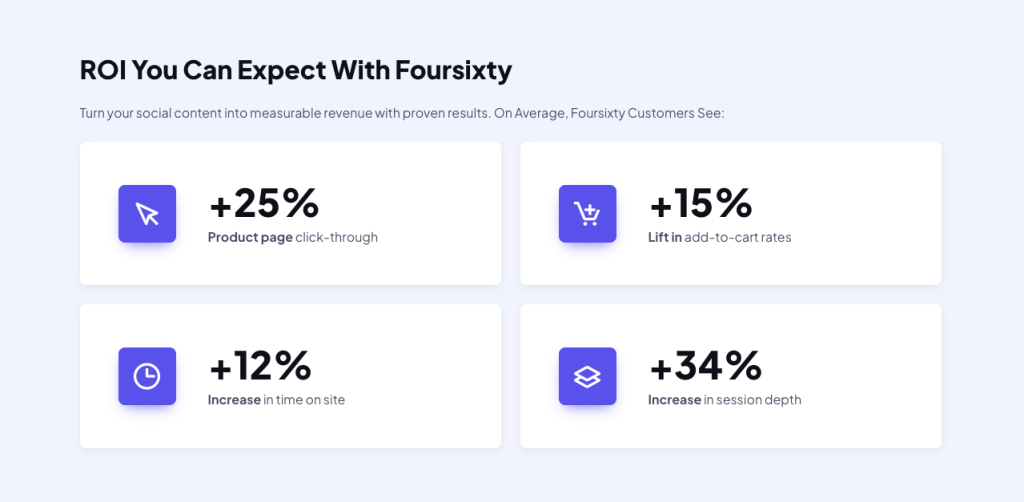
Authentic product videos convert because they collapse uncertainty. A polished brand ad tells me what you want me to believe; customer video tells me what I’m likely to experience. That difference is the heart of Social Proof Psychology and Social proof in eCommerce: people trust proof that looks like reality, not performance.
The operational challenge is that YouTube content often exists in one place (a creator’s channel), while your conversion engine lives elsewhere (your Shopify PDP). This is where shoppable content becomes a system problem: you want the same trust asset to work across YouTube, your site, email, and paid retargeting — not just once in a video. If your stack already supports Shoppable galleries, you can turn customer videos into persistent PDP content rather than one-off hype.
While Foursixty doesn’t have shoppable capabilities on YouTube, it can help you optimize your Instagram and TikTok content.
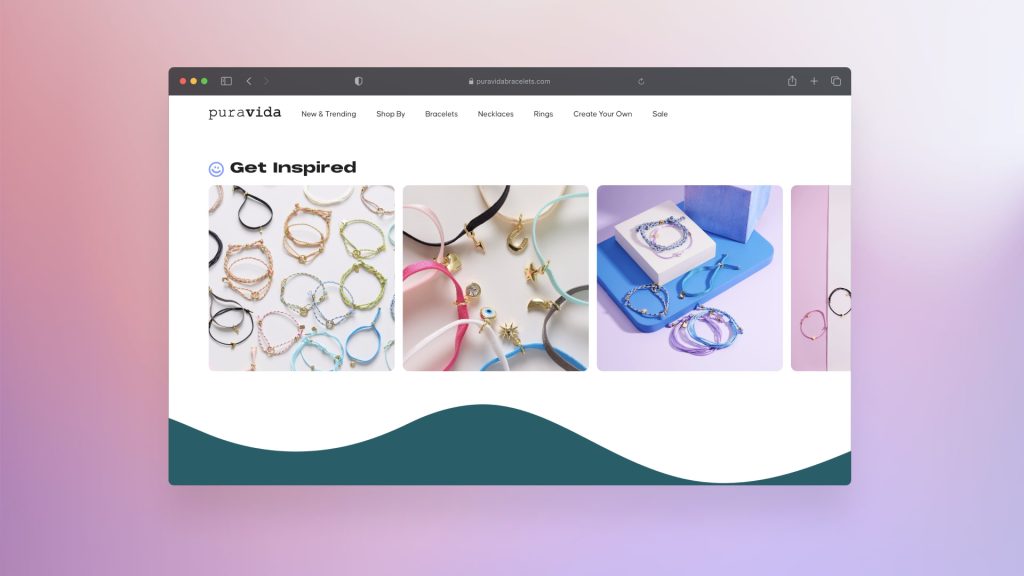
In the Pura Vida case study, Foursixty is positioned as a way to turn social content into shoppable experiences across the site, with reported outcomes like 17% of online revenue tied to Foursixty engagement, 18.2% click-through, and improvements to page views and bounce rate. Those numbers matter because they connect shoppable content to business outcomes — not vanity metrics.
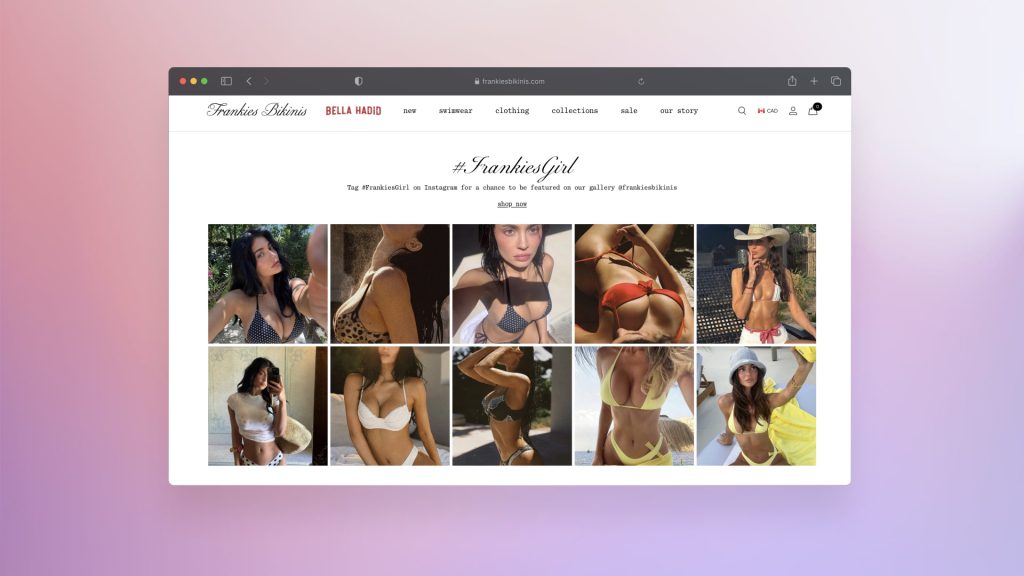
A second example: the Frankies Bikinis case study reports 23% of total revenue and 19% of orders via Foursixty, illustrating how shoppable UGC and shoppable galleries can function like conversion layers rather than brand dressing. Whether your primary acquisition comes from YouTube, Instagram, or TikTok, the underlying play is the same: treat proof as an owned asset, then deploy it wherever the shopper needs confidence.
Common YouTube Shopping mistakes brands make
The most common error is treating YouTube like TikTok: chasing short spikes instead of building search-driven assets. A close second is ignoring Merchant Center/feed hygiene, which leads to broken tags, rejected products, and wasted production cycles. Many brands also underinvest in calls-to-action because they assume “the product sells itself,” but on YouTube the CTA is often the bridge between intent and action — especially when checkout redirects off-platform.
Finally, brands often fail to measure post-click performance. If you’re not tracking how YouTube shoppers behave on PDPs — time on page, add-to-cart, conversion rate, AOV — you can’t improve. That’s not a marketing problem; it’s a commerce leadership blind spot.
Is YouTube Shopping right for your brand?
YouTube Shopping is strongest when customers research before buying, when product education reduces returns, and when SEO matters to your growth model. If you sell higher-ticket products, YouTube can outperform short-form platforms because trust is a prerequisite to conversion. If you can’t produce video consistently, you can still play via creator partnerships — but then your leverage comes from affiliate economics, retailer readiness, and the operational quality of your content pipeline.
A quick decision checklist (keeping it readable):
- Do customers compare options before purchase?
- Does your category benefit from demonstrations or tutorials?
- Can you sustain long-form videos (or a creator network) over time?
- Is organic search a meaningful part of your strategy?
- Do you have the infrastructure to reuse proof across PDPs and campaigns?
The future of YouTube Shopping & video commerce
YouTube is moving toward a world where “video is the new product page.” AI-driven recommendations will increasingly match shoppers to videos that answer their objections, not just videos that entertain. Deeper Google Shopping integration will tighten the loop between search, content, and purchase, and affiliate ecosystems will expand creator storefront behaviors across regions like India and Indonesia.
As this evolves, the winners will be brands that treat shoppable video as a durable conversion asset — something you build, measure, improve, and redeploy. That’s the core strategic shift from “content marketing” to true social commerce infrastructure.
Ready to turn video engagement into measurable revenue?
If you’re serious about YouTube Shopping, don’t start with features — start with the system. Build intent-driven content, tag products that the content proves, tighten your product feed hygiene, and measure downstream performance on-site so you can iterate. Then scale what works with retargeting and partner ecosystems, rather than trying to buy your way out of weak fundamentals.
Try out Foursixty on Instagram and TikTok, to drive conversions from your social channels.
FAQs
How does YouTube Shopping work?
YouTube Shopping works by attaching structured product data to content so viewers can shop directly from videos, Shorts, and live streams. Eligible creators can tag products, which then appear as a shopping button in long-form videos or a product sticker in Shorts, and those products can also surface in a product shelf and channel store experiences. The key difference versus “links in description” is that shopping becomes a native interaction, which reduces friction in the engagement-to-purchase funnel.
How do I go on a YouTube Shop?
For creators, access typically starts in YouTube Studio where eligible channels can enable Shopping tools through the Earn tab and connect a store or retailer integration. For merchants, it often involves connecting your product feed via Google Merchant Center (and, for many Shopify brands, the Google & YouTube channel inside Shopify admin). If you’re not seeing the option, eligibility criteria (region, YPP status, subscriber thresholds) are usually the gating factor.
How to buy from YouTube Shopping?
Buying from YouTube Shopping usually begins when you click a tagged product in a video, Shorts sticker, or product shelf item. Depending on region and setup, you may complete checkout either via a redirect to the retailer’s ecommerce site or, in certain US configurations, through embedded checkout in the YouTube app. As a shopper, the experience should feel like “watch → tap product → confirm details → purchase,” without having to hunt for links.
How do I get to purchases on YouTube?
On the buyer side, your purchases are generally accessible through your account order/purchase history surfaces inside the YouTube app experience, though the exact UI can vary by region and whether the transaction occurred in-app or on the retailer’s site. From a brand perspective, the more actionable view is in your ecommerce analytics: track traffic from YouTube, then measure PDP conversion and AOV to quantify what YouTube is really contributing. Shopify merchants should also reconcile what Merchant Center and YouTube surfaces report versus what your store analytics show, since attribution can differ across systems.
How to get access to YouTube shopping?
Access comes down to eligibility and setup. YouTube’s “get started” documentation outlines requirements like being in the YouTube Partner Program and being in eligible regions such as the US, South Korea, Indonesia, India, Thailand, and Vietnam (among others depending on the specific feature set). Once eligible, creators typically enable Shopping tools via YouTube Studio and connect a store/retailer.
What is YouTube Shopping?
YouTube Shopping is a commerce layer that lets creators and brands attach products to YouTube content so viewers can discover and purchase while watching. It includes product tagging, product shelves under content, channel stores, and shopping buttons/stickers across Shorts and long-form videos. Strategically, it’s YouTube’s way of turning its search + trust advantage into direct revenue — not just ad revenue.
How did your YouTube channel start out and how is it going right now?
In practice, most successful shopping-enabled channels start narrowly: one audience, one problem, one repeatable format (reviews, comparisons, tutorials), then expand once retention and search discovery stabilize. Early performance usually looks “small but consistent,” because evergreen growth compounds slowly at first, then accelerates once older videos rank and playlists create session depth. The healthiest signal isn’t virality — it’s a rising base of search-driven views paired with improving conversion on tagged products or site traffic quality.
Do fellow YouTube creators find you get a lot of scam collaboration emails?
Yes — scam and low-quality collaboration outreach is a common complaint among creators, especially as affiliate marketing and shopping features expand. The operational fix is part process, part hygiene: verify senders, use brand domains, confirm payment/contract terms, and avoid clicking unknown attachments. From a brand perspective, sloppy outreach damages trust; from a creator perspective, it’s a time tax that can reduce willingness to engage new partners.
Can YouTube Shorts really hurt your main channel?
Shorts can dilute a channel if the content attracts an audience that doesn’t watch long-form, which can confuse your analytics and weaken signals like average view duration for the channel overall. But Shorts can also be a strong top-of-funnel discovery tool if you intentionally route viewers into long-form videos via pinned comments, end screens (where applicable), and playlists, using Shorts as “trailers” for deeper content. The strategic question is whether your Shorts audience aligns with your long-form promise; if it doesn’t, you’ll feel it in reduced long-form session depth and weaker returning-viewer behavior.
Do I need to have a Shopify store first, or can I connect to other services?
You don’t strictly need Shopify, but Shopify is one of the most direct and documented paths for merchants because the Google & YouTube channel can sync products to Merchant Center and guide YouTube Shopping setup. Other setups can work via Google Merchant Center and eligible retailer integrations, but the practical reality is that “feed + compliance” is the requirement, not the platform name. If your business runs on another ecommerce platform, expect more manual configuration and more importance placed on clean product data.
How to start an ecommerce business (guide context) and what is dropshipping?
Starting an ecommerce business in 2025 still comes down to fundamentals: a product with real demand, clear differentiation, and a distribution strategy that can be measured. Dropshipping can reduce inventory risk, but it often increases brand risk because shipping times, quality control, and customer experience are harder to manage — which can undermine trust signals in commerce. If you plan to use YouTube Shopping, remember that YouTube is a trust platform; if fulfillment disappoints, the backlash can show up publicly in comments, reviews, and creator relationships.
What products can I buy through YouTube Shopping?
In practice, shoppers can buy products that participating retailers and eligible creators have tagged and made available through shopping features, often spanning categories like beauty, apparel, home, electronics accessories, and merch. What’s available can vary by region, creator eligibility, and retailer participation, which is why you’ll see differences across markets like the US, India, and Indonesia. As YouTube expands retailer partnerships, the breadth of product selection tends to expand as well.
How can I enable YouTube Shopping for my channel?
Creators generally enable YouTube Shopping through YouTube Studio (Earn tab) when eligible, then link a store or retailer connection and start tagging products in content. Eligibility is often tied to YouTube Partner Program participation, subscriber thresholds, region, and policy compliance (including community guidelines). If you can’t enable it, the fastest diagnosis is usually: (1) confirm YPP status, (2) confirm region eligibility, (3) confirm channel category constraints (e.g., some music channel limitations for certain shopping programs).
How can I integrate my products with YouTube Shopping?
For many Shopify merchants, integration runs through the Google & YouTube sales channel in Shopify admin, where you connect Merchant Center, sync products, and then complete YouTube Shopping setup. The real “integration work” is data: product titles, variants, availability, and policy compliance must be accurate, or your products won’t render reliably. Once the feed is stable, you can focus on content strategy and tagging — the part most brands want to jump to first, but can’t scale without the plumbing.
What are the benefits of using YouTube Shopping for creators and brands?
For creators, YouTube Shopping can unlock diversified revenue through affiliate marketing and product promotion that fits naturally into content, especially in review/tutorial formats. For brands, the advantage is trust-driven conversion: long-form content reduces uncertainty, improves click quality, and often produces better downstream purchase confidence than short-form-only channels. Strategically, it also creates evergreen assets that compound over time, improving ROI across the full engagement-to-purchase funnel — especially when you pair YouTube proof with strong PDP optimization on your Shopify site.