Pinterest Shopping is Pinterest’s commerce layer that turns planning behavior into product discovery — less “scroll for entertainment,” more “search with intent.” Unlike feed-first platforms, Pinterest behaves like a visual search engine where people actively look for ideas — home decor, interior design, seasonal moments — and expect to click into product details when something fits. When brands treat it as true Social Commerce infrastructure — clean catalog data, strong creative, and measurable handoffs to checkout — it can outperform noisier channels on downstream efficiency and Social Commerce ROI. When brands treat it like generic social media posting, they miss the platform’s advantage: evergreen intent that compounds long after a Pin is published.
What Is Pinterest Shopping?
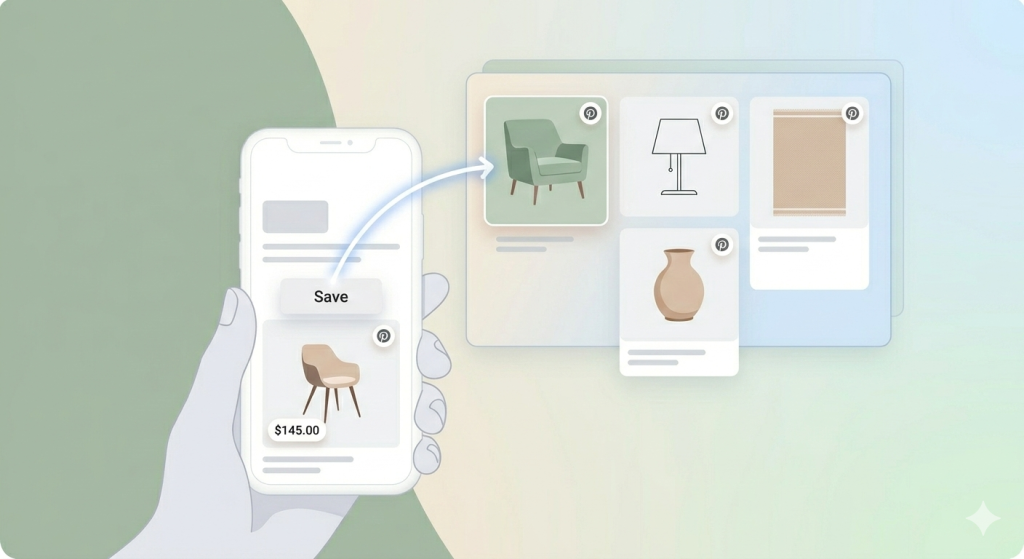
Pinterest Shopping refers to the set of features that make products discoverable and shoppable across Pinterest surfaces, typically through Product Pins, catalog-driven experiences, and shopping ads. Pinterest defines Product Pins as shoppable Pins that display accurate information like pricing and availability at a glance, tied to catalog and site data.
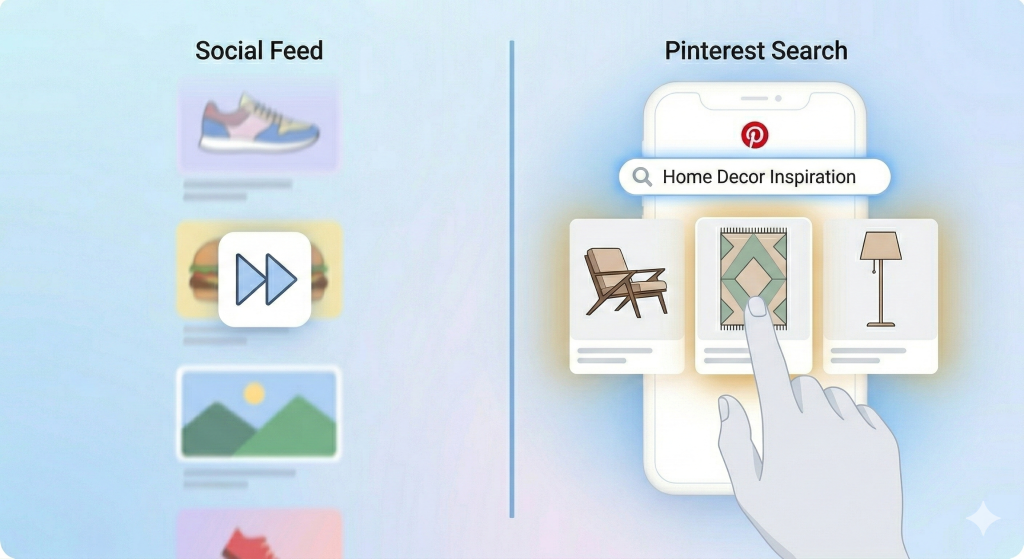
This positioning places Pinterest slightly differently from TikTok Shop, Facebook Shops, or YouTube Shopping. Rather than creator-led entertainment with commerce layered on top, Pinterest operates as discovery-led search behavior with commerce attached. People arrive with intent — they are planning projects, exploring aesthetics, and narrowing choices.
How Pinterest Shopping Works
At the system level, Pinterest Shopping runs on structured product data: a product feed, catalog ingestion, and Pins that show product details and link shoppers to your site or app. Pinterest generally optimizes for high-quality handoffs to your own storefront rather than managing checkout directly on-platform. Deep links and direct links are designed to reduce friction between inspiration and purchase.
That difference matters strategically. Pinterest success depends on making discovery seamless while ensuring the transition to your storefront is predictable and conversion-ready — because your PDP and checkout ultimately complete the transaction.
Pinterest Shopping typically includes:
- Product Pins
- Shoppable Pins
- Shopping ads
- Merchant surfaces tied to catalog feeds
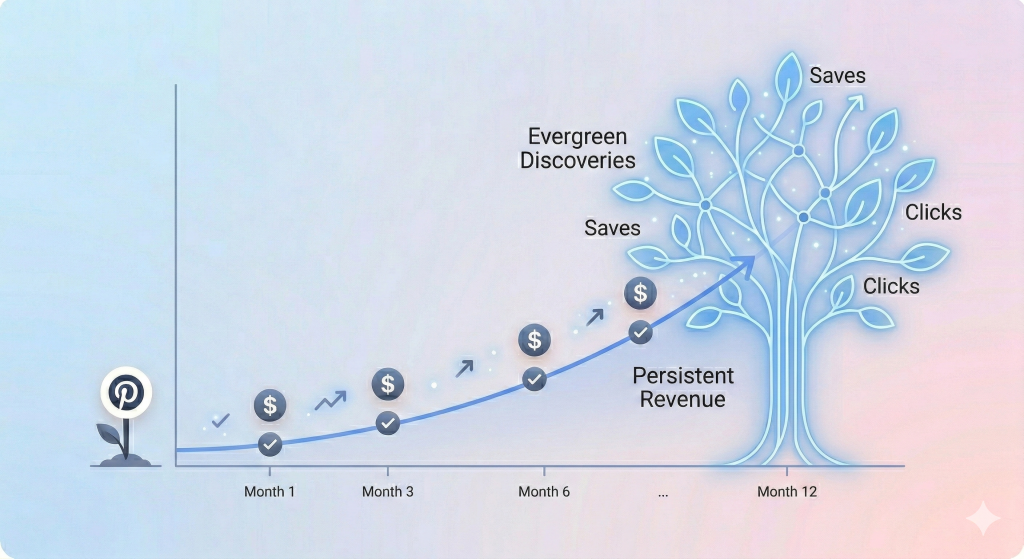
Unlike algorithm-driven feeds, Pins often have evergreen shelf life. A single strong asset can generate traffic for months, which shifts attribution thinking from short-term engagement metrics toward longer Revenue Attribution windows.
Pinterest Shopping vs Regular Pinterest Marketing
Regular Pinterest marketing may involve inspirational content, mood boards, or organic Pins focused on reach. Pinterest Shopping transforms inspiration into measurable commerce by attaching structured product metadata, catalog connections, and purchase pathways.
Keyword strategy and data hygiene matter more than posting frequency. Treating Pinterest like a feed-only platform results in visually appealing content that fails to convert because the Engagement-to-Purchase Funnel breaks at the moment of highest intent.
Who Should Use Pinterest Shopping?

Pinterest Shopping performs best in categories where planning precedes purchase:
- Home decor and interior design
- Beauty and fashion
- Weddings and events
- Seasonal gifting
- Lifestyle aesthetics and spatial design
Brands that succeed typically produce consistent high-quality visuals and maintain reliable product data. Because Pinterest acts as a visual decision engine, inaccuracies in pricing or availability quickly erode trust.
Why Pinterest Is Unique in Social Commerce
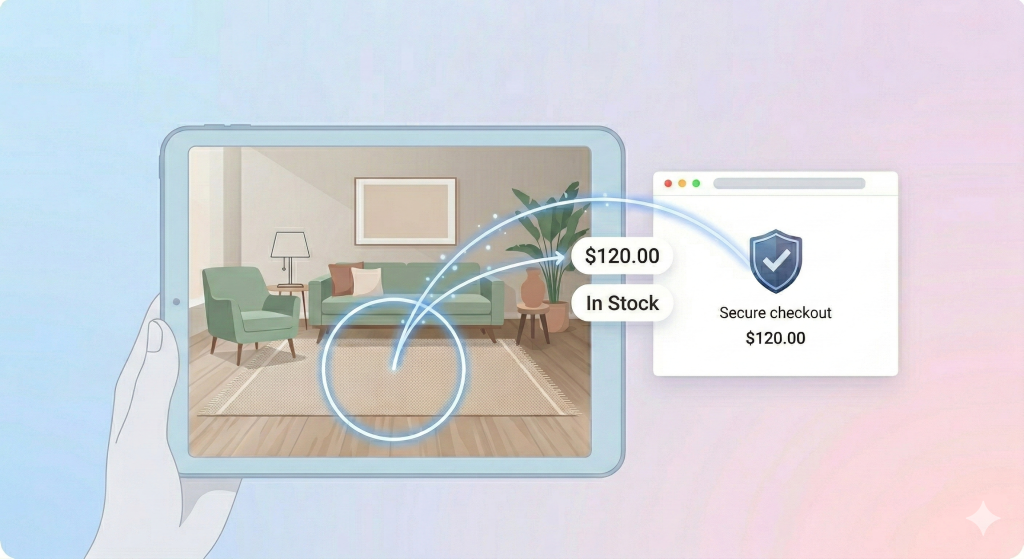
High Purchase Intent Behavior
Pinterest users often arrive with a planning mindset rather than passive browsing behavior. Conversion psychology shifts from impulse persuasion toward confidence-building. Brands should expect fewer wasted clicks and stronger downstream metrics such as higher AOV when experiences align with project-driven intent.
Evergreen Discovery vs Algorithm Feeds
Unlike TikTok’s fast-moving discovery, Pinterest content is durable and query-driven. Pins can continue surfacing long after publication, creating compounding value — but only if catalog data and landing pages remain accurate over time.
Visual Search & AI Recommendation Engine
Pinterest operates more like SEO than social media. Images, metadata, and destination relevance strongly influence visibility. This reinforces the need for structured product information and intentional creative design.
Longer Buyer Consideration Cycles
Pinterest frequently appears earlier in the buyer journey. Users save ideas, compare options, and revisit decisions. Brands that rely solely on last-click attribution often underestimate Pinterest’s impact; multi-touch revenue attribution reveals its role as a demand generator.
Pinterest Shopping Features Explained
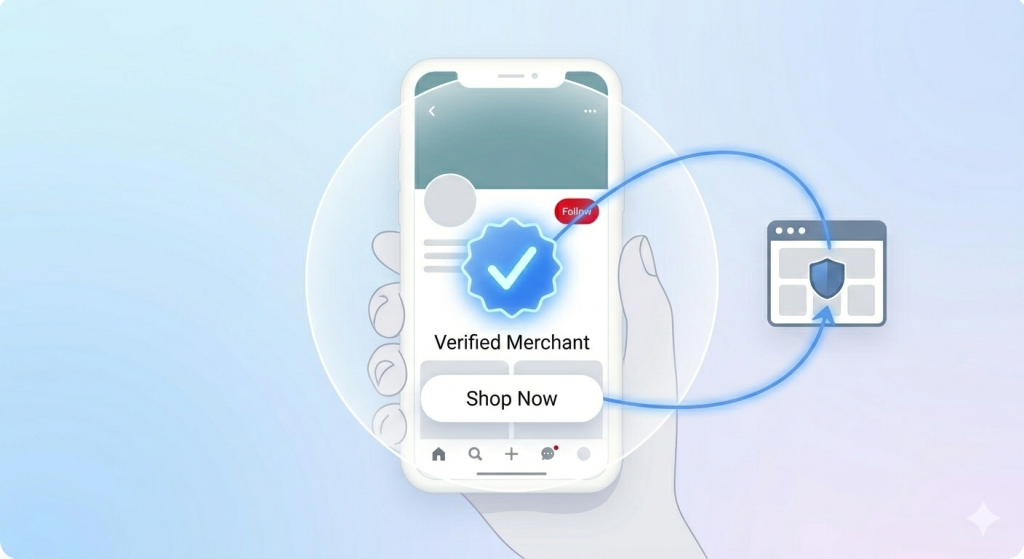
Product Pins
Product Pins display pricing, availability, and product details directly within the Pin experience. They bridge inspiration and commerce by reducing uncertainty. Broken feeds or inaccurate data create “commerce disappointment,” damaging trust even when impressions remain strong.
Verified Merchant Program
Pinterest’s Verified Merchant Program (VMP) signals legitimacy and improves shopper confidence. Eligibility depends on account setup, catalog quality, and compliance with merchant guidelines. Rather than a vanity badge, VMP functions as trust infrastructure.
Shopping Ads
Shopping ads amplify high-intent discovery. They perform best when aligned with specific shopper problems — for example, “modern neutral living room refresh” rather than generic lifestyle imagery. Treat them more like search ads with visuals than traditional social ads.
Collections & Idea Pins (Shoppable)
Pinterest excels at organizing desire into thematic collections. Successful commerce execution shows cohesive product sets that make a project feel complete, turning boards into functional shopping pathways.
Catalog Integration
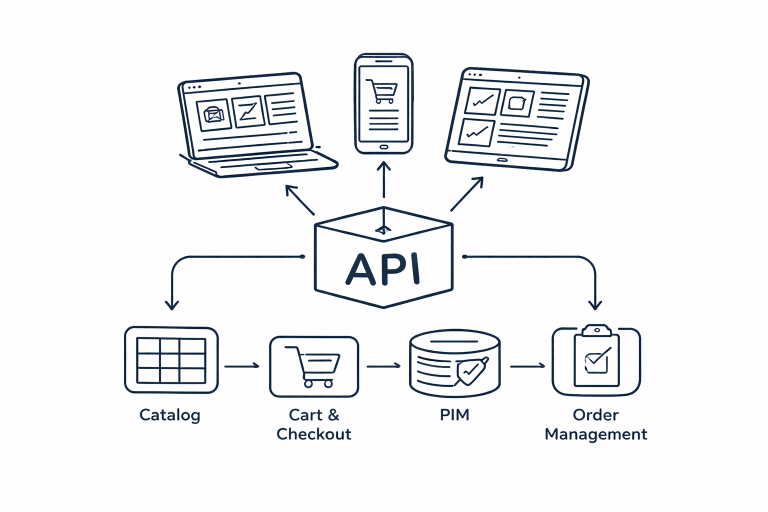
Catalog integration forms the backbone of Pinterest Shopping. Structured feeds ensure pricing, variants, and availability remain accurate. For brands running headless or API-driven commerce, Pinterest becomes a real-time test of data hygiene.
Pinterest Shopping Requirements & Costs
While organic Product Pins can be free to implement, scaling performance requires investment in creative production, feed maintenance, and measurement infrastructure. Pinterest typically prioritizes sending users to merchant websites rather than hosting checkout directly, so brands should optimize on-site experiences accordingly.
Pinterest Shopping vs. Instagram and TikTok Shop
| Feature | Pinterest Shopping | TikTok Shop | Instagram Shops |
|---|---|---|---|
| User Intent | High search intent | Entertainment-driven | Social browsing |
| Content Lifespan | Evergreen | Short-lived | Moderate |
| Checkout Model | Often website redirect | Native / in-app | Mixed (in-app + website) |
| Discovery Method | Search-based | Algorithm feed | Feed + Explore |
Pinterest functions as the planning engine of social shopping. TikTok and Instagram convert attention into immediate action, while Pinterest captures structured intent earlier in the journey. Effective omni-channel commerce strategies allow product truth, pricing, and proof to travel consistently across platforms.
How to Optimize Pinterest Shopping for Conversions
Step 1: Optimize Product Metadata
Pinterest behaves closer to SEO than social media. Titles, attributes, and descriptions must match real search behavior and align with PDP messaging to avoid expectation mismatches.
Step 2: Use High-Quality Lifestyle UGC
Lifestyle UGC reduces uncertainty by showing real-world context, scale, and usability. While studio images present clarity, authentic visuals build confidence.
Step 3: Create Keyword-Rich Descriptions
Descriptions serve as relevance signals and expectation-setting tools. Clear, keyword-aligned messaging attracts high-intent traffic.
Step 4: Sync Real-Time Product Data
Accurate feeds form the baseline for conversion. Inconsistent pricing or availability undermines the platform’s promise of transparency.
Step 5: Retarget High-Intent Pinners
Pinterest often builds consideration audiences over time. Retargeting across Meta, Google, or email channels helps convert saved intent into purchases.
Scaling Pinterest Shopping with User-Generated Content
Why UGC Performs Better Than Studio Images
Studio imagery communicates product details, but UGC answers the psychological question: “Will this work for me?” By showing real contexts and authentic environments, UGC lowers uncertainty and accelerates decision-making.
Extending Pinterest UGC to Your Website
Pinterest often sparks discovery, but the storefront closes the sale. The same UGC that performs well on Instagram or TikTok can reinforce trust on PDPs, improving CRO and increasing AOV when shoppers arrive from Pinterest.
Creating Omnichannel Social Commerce Experiences
Pinterest should complement other commerce channels rather than operate independently. Maintaining consistent product truth and social proof across Pinterest discovery, Instagram/TikTok shoppable experiences, and your website ensures continuity throughout the customer journey.
Common Pinterest Shopping Mistakes Brands Make
The most common mistake is treating Pinterest like Instagram — prioritizing posting frequency over keyword strategy and catalog integrity. Additional pitfalls include ignoring feed errors, failing to plan seasonally, and avoiding UGC due to perceived complexity.
Is Pinterest Shopping Right for Your Brand?
Pinterest Shopping works best when:
- Products are visually demonstrable
- Customers plan before purchasing
- Product metadata is structured and accurate
- High-quality imagery or UGC can be produced consistently
The Future of Pinterest Shopping & Visual Search Commerce
Pinterest’s evolution points toward deeper visual search, smarter recommendations, and tighter commerce integrations while maintaining its identity as a planning engine. As AI personalization grows, brands that combine structured data with authentic proof will outperform competitors. Visual search commerce increasingly resembles distributed product discovery, where Pins serve as early-stage product pages and the storefront finalizes conversion.
The Michi case study, Within the first 30 days, Foursixty had generated MICHI a 51x ROI – a massive increase relative to the competing platformthey had previously used.
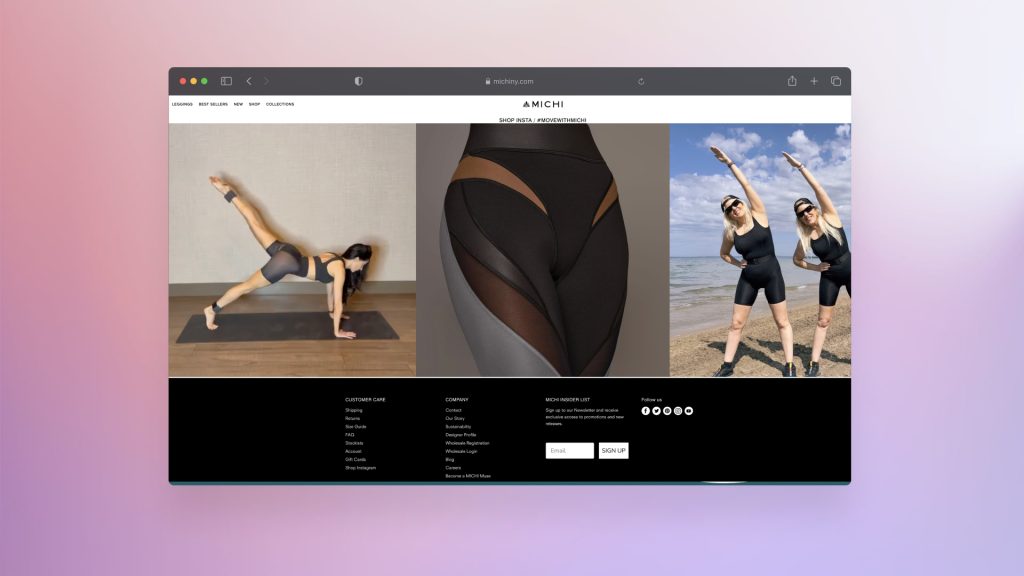
While Foursixty cannot help brands on Pinterest, we can helps brands operationalize UGC as shoppable infrastructure (galleries and PDP proof layers) on Instagram and even Tiktok traffic converts with higher confidence and cleaner attribution.
Foursixty helps Shopify brands close the gap between inspiration and purchase by turning Instagram content and user-generated content into shoppable storefront experiences that build trust and boost sales. Download our highly rated app in the Shopify app store. Shopify integration can take less than 1 hour.
Book a strategy call with our sales leader
FAQs
Can we purchase things from Pinterest?
Yes—Pinterest supports shopping experiences where Product Pins and other shopping formats show products that are available to buy, typically directing shoppers to the merchant’s website to complete the purchase. Pinterest’s own help content notes that Product Pins direct you to the merchant’s website, and that order questions should go to the merchant you bought from. For shoppers, that means Pinterest is often the discovery layer, while your checkout and returns experience is handled by the retailer.
Is Pinterest a shopping website?
Pinterest isn’t a traditional shopping website like a marketplace-first platform; it’s a visual discovery engine with commerce features layered in. Pinterest’s shopping pages describe optimizing for high-quality transfers to your app or site rather than handling checkout on Pinterest itself, which is a different model than native marketplace checkout. In practice, it behaves like “search + inspiration + product discovery,” which can be extremely commercial when your catalog and landing pages are tight.
What happened to Pinterest Shop?
Pinterest’s “Shop” surfaces have changed over time, and the profile Shop tab was retired for many accounts, according to Pinterest’s own business community responses. The practical takeaway is that Pinterest shopping didn’t disappear—it shifted toward Product Pins, catalogs, and other shopping placements rather than a single persistent profile tab. Brands should build around Product Pins, catalog distribution, and shopping ads, not around a single navigation element.
How do I buy something I saw on Pinterest?
Typically, you tap the Pin, look for product details like price and availability, then click through to the retailer’s site to purchase. Pinterest’s help guidance explains that Product Pins direct shoppers to the merchant’s website. If you can’t find the purchase link, it usually means the Pin isn’t a Product Pin (it may be inspirational content) or the product data isn’t properly connected.
Do you use Pinterest to shop?
Many shoppers use Pinterest to plan purchases—even when they don’t complete checkout on Pinterest—because it’s a high-intent place to compare styles and save options. That behavior is exactly why Pinterest can be powerful for home decor and interior design: people save, revisit, and narrow choices over time. The commerce opportunity for brands is to make those saves and revisits measurable with Product Pins and clean product metadata so intent turns into sessions and revenue, not just inspiration boards.
Is there a Pinterest shop or a shop tab?
There are shopping experiences on Pinterest, but the profile Shop tab has been retired for many accounts, per Pinterest’s business community guidance. That doesn’t remove shopping capability—it just changes how shoppers find products (via Product Pins, catalog-driven placements, boards with product Pins, and shopping ads). The best brand strategy is to create shoppable discovery pathways that don’t depend on one tab existing.
Does Pinterest offer native checkout?
Pinterest’s current public positioning is that it generally does not handle checkout on Pinterest and instead optimizes for high-quality transfers to your app or site. Historically, Pinterest has tested limited hosted checkout for select US Shopify merchants in the Verified Merchant Program, but brands should plan around website checkout unless Pinterest explicitly enables a hosted option for their account and region.
What are product Pins?
Product Pins are shoppable Pins that display product information such as pricing and availability, making it easier for shoppers to evaluate items at a glance. They connect Pinterest’s inspiration behavior to commerce by turning a visual into a structured product entry point. For brands, Product Pins only work as well as the catalog and landing page they connect to—broken data breaks trust.
How do I find shoppable products on Pinterest?
Shoppable products usually appear as Product Pins with visible product details (like price) or shopping annotations that indicate the Pin links to a product. Pinterest notes that shopping experiences are rolling out and may differ across accounts, so some features may appear gradually. From a shopper perspective, the quickest path is often searching for a product category (e.g., “home decor”) and then filtering into Pins that show product details and lead to retailers.
How does Pinterest Shopping work?
Pinterest Shopping works by connecting a merchant’s product catalog to Pinterest so that Pins can display structured product details and route shoppers to the merchant’s site/app to purchase. Pinterest’s business documentation emphasizes accurate product info on Product Pins and high-quality handoffs to merchant destinations instead of Pinterest-owned checkout. For brands, the system succeeds when feed accuracy, creative quality, and landing page relevance move together.
How do I find and use Pinterest shopping features?
For merchants, shopping features typically start with setting up a business account, uploading/syncing a catalog, and ensuring products meet merchant guidelines; Pinterest’s guidance for catalogs and shopping is the best starting point. For shoppers, the experience is more passive: shopping features appear where Product Pins and shopping placements are enabled, often showing price and availability and linking out to retailers. If a feature isn’t visible, it may be a regional rollout issue, account eligibility, or simply the difference between inspiration Pins and commerce-enabled Pins.
How do I use Pinterest for shopping inspiration?
Pinterest is strongest when you treat it as a planning tool: save ideas into boards, compare styles, and revisit options until a clear “shortlist” emerges. That behavior is why Pinterest can drive high-intent clicks even if conversion happens later—Pinterest is a consideration engine. For brands, the commercial move is to make inspiration actionable: publish keyword-aligned visuals, attach product metadata through Product Pins, and ensure the landing page experience matches the promise so saved intent becomes purchase intent.